Where to Find a Co-Founder for Your Startup in 2026
Discover the best platforms and strategies for finding the perfect startup co-founder in 2026. From AI matching to local meetups.
Kinhive Team · May 15, 2025 · 7 min read
On this page+
Starting a company alone is possible, but statistics show that startups with co-founders have significantly higher success rates. Finding the right co-founder, however, remains one of the most challenging aspects of entrepreneurship. Unlike hiring employees, you’re not just looking for skills—you’re choosing a business partner who will share ownership, make crucial decisions alongside you, and ideally stick with you through years of uncertainty.
The traditional approach of tapping friends, family, or former colleagues often falls short. Your college roommate might be brilliant, but do they share your vision for the company’s future? Your former coworker might have complementary skills, but are they prepared for the financial uncertainty and long hours that come with startup life?
The landscape has evolved dramatically. Dedicated platforms now exist specifically for founder matching, each with its own approach to connecting entrepreneurs. Some focus on technical skills, others prioritize cultural fit, and a few use AI algorithms to suggest potential partners based on working styles and values alignment.
What Makes a Great Co-Founder Match
Before diving into where to find co-founders, it’s essential to understand what actually makes partnerships work. Many founder relationships fail not because of skill gaps, but because of misaligned expectations and incompatible working styles.
Complementary Skills Matter, But Values Matter More
Yes, you want someone whose expertise fills gaps in your own knowledge. If you’re a technical founder, you might seek someone with marketing or business development experience. If you come from a business background, you might need a technical co-founder to build your product.
But complementary skills only work if they’re built on a foundation of shared values. Do you both prioritize work-life balance equally? Are you aligned on company culture and hiring practices? Do you agree on risk tolerance and growth pace? These fundamental questions often determine whether partnerships thrive or implode.
Working Style Compatibility
Consider how you make decisions, handle stress, and communicate during difficult periods. Some founders prefer collaborative decision-making, while others work better with clearly defined areas of responsibility. Some thrive in high-pressure situations, while others need time to process and strategize.
These differences aren’t necessarily deal-breakers, but they need to be acknowledged and addressed upfront. The best co-founder relationships involve people who understand each other’s working styles and have established systems for navigating differences.
Quick Compatibility Assessment
Before seriously pursuing any potential co-founder relationship, consider these questions:
- Do we share similar visions for company size and growth trajectory?
- Are we equally committed to the time and financial investment required?
- How do we each handle disagreements and conflict resolution?
- What are our expectations around equity, roles, and decision-making authority?
- Do our personal timelines align regarding major life changes or commitments?
Top Places to Find Your Co-Founder
Kinhive: AI-Powered Matching for Women-Led Startups
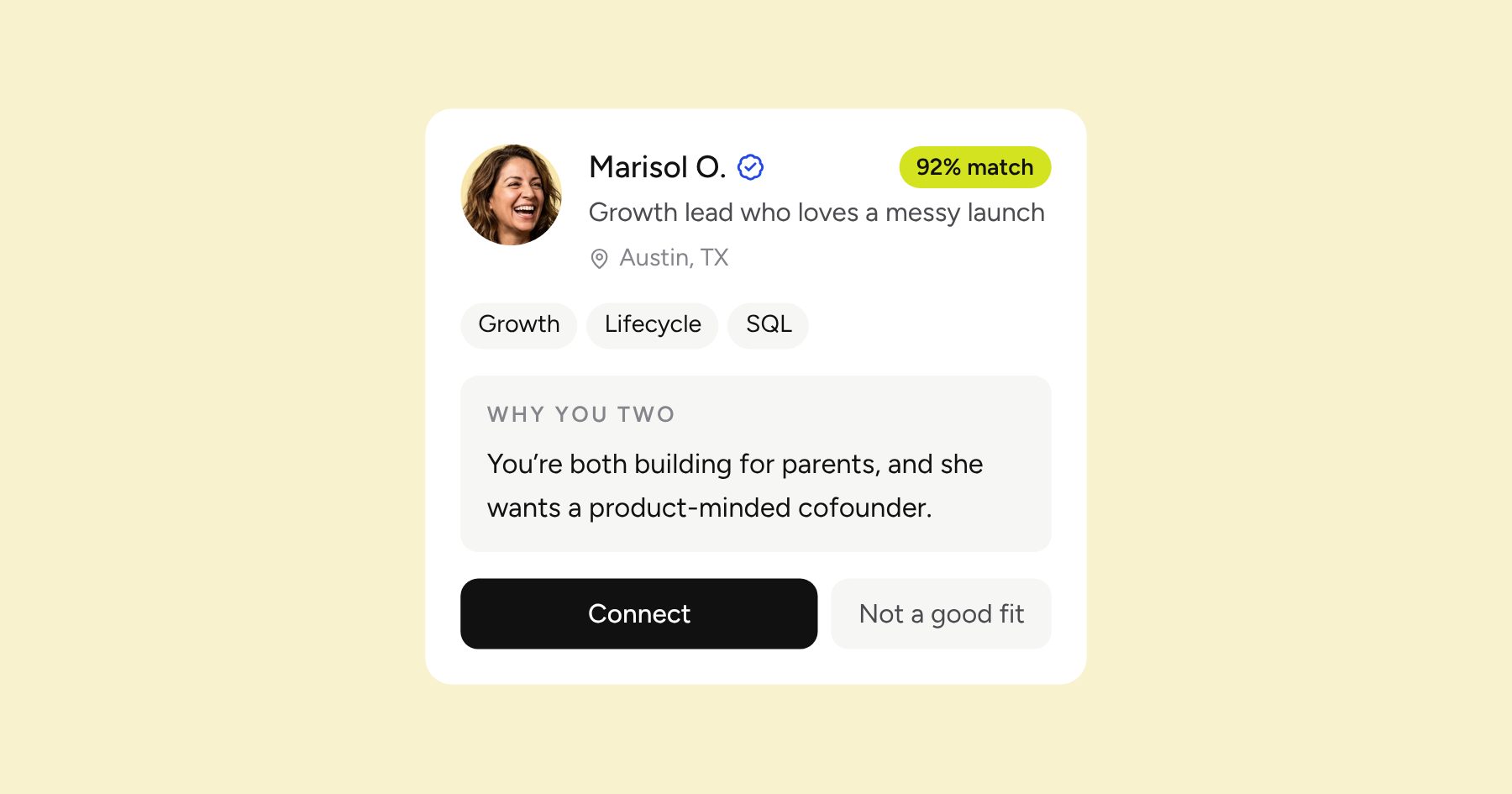
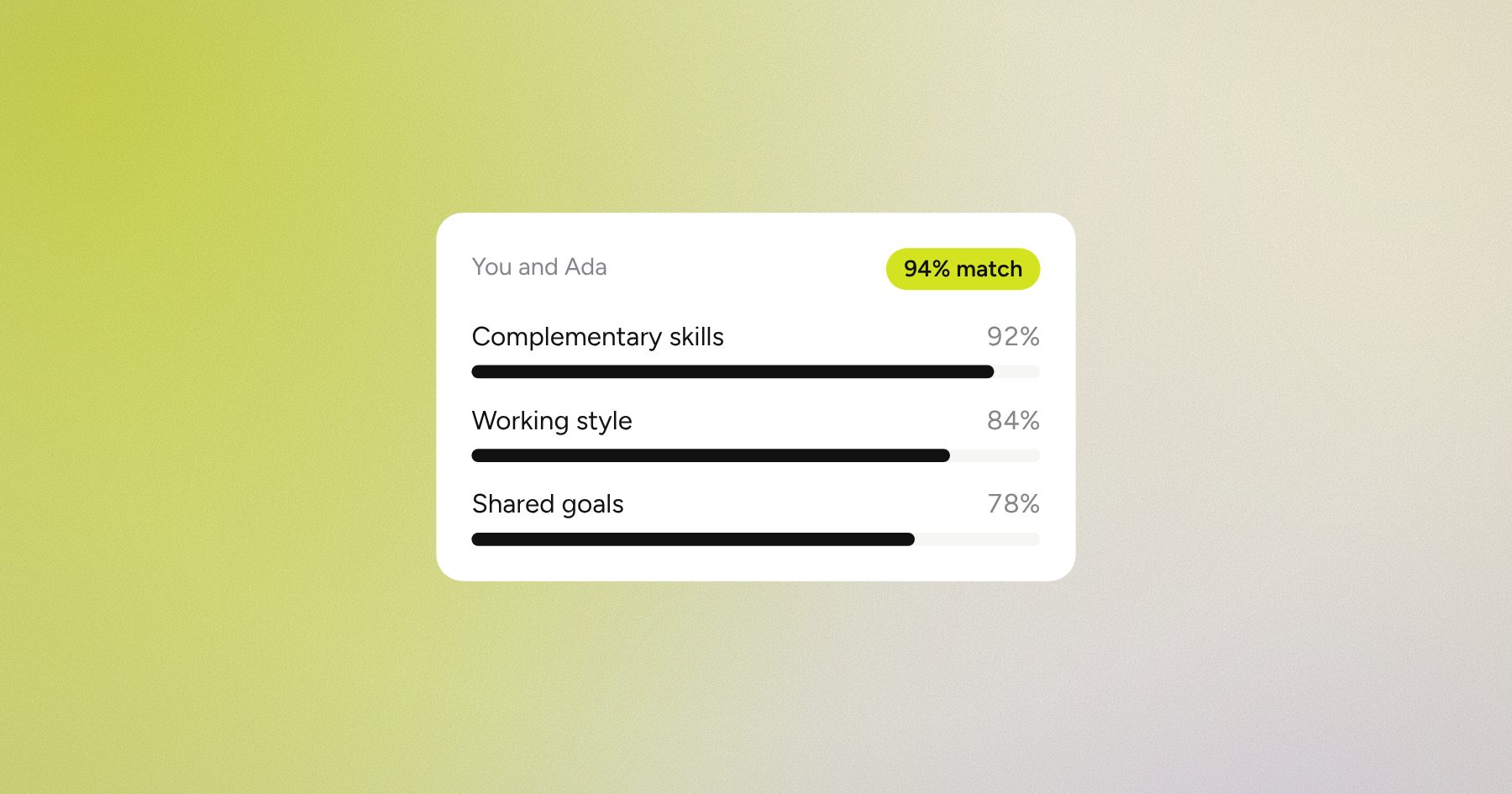
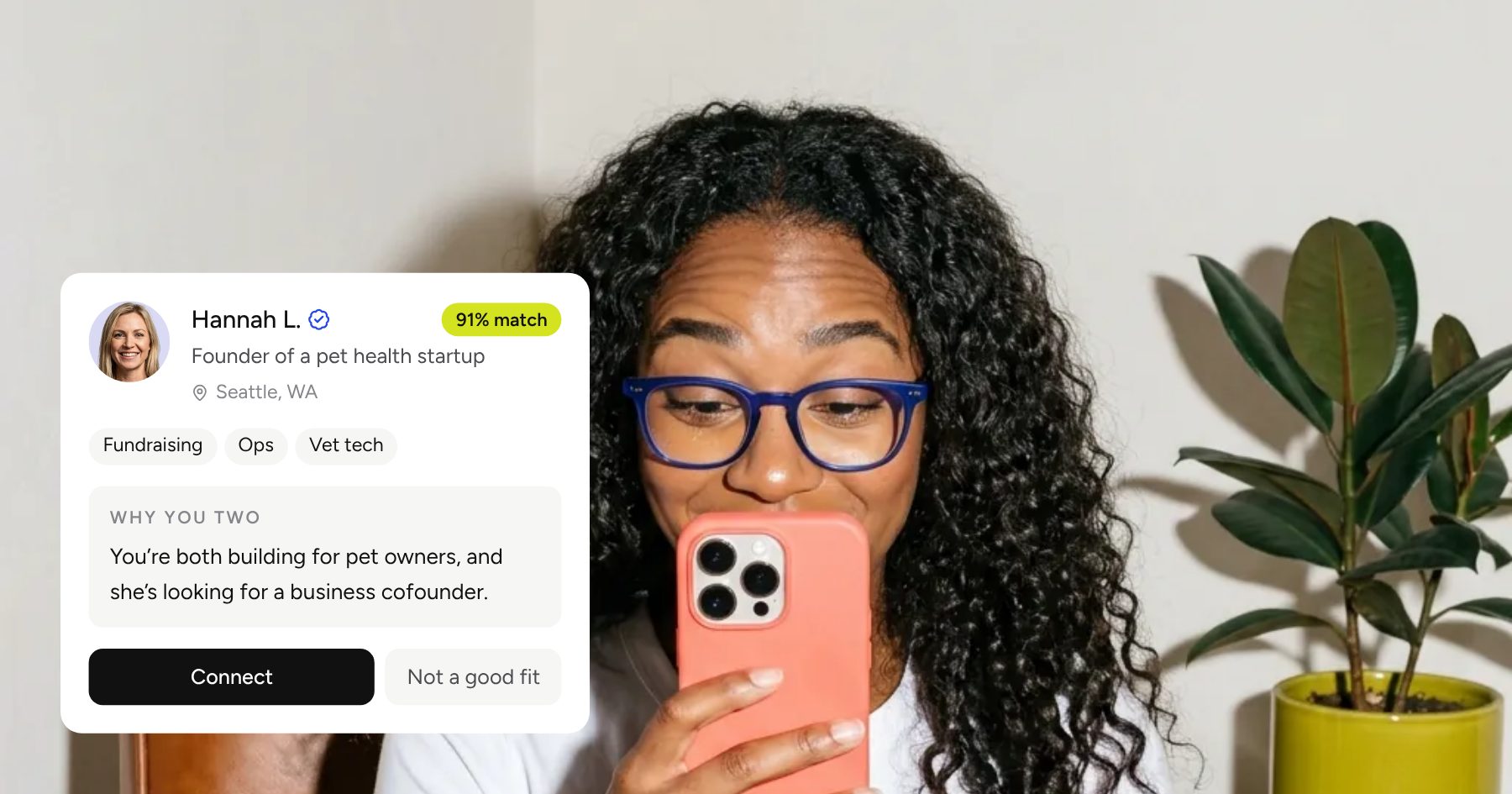
Kinhive stands out by addressing specific challenges that women face in traditional networking environments. Created by twin sisters who experienced firsthand the difficulty of finding complementary team members, the platform uses AI to suggest potential collaborators based on factors beyond just skills.
The platform considers working styles, life stages, availability, and collaboration preferences alongside professional experience. This approach produces teams that function well together rather than just covering required capabilities. The focus on mission alignment particularly benefits entrepreneurs seeking purpose-driven partnerships. Kinhive’s filtering gives members and founders the ability to find co-founder partnerships to contract work to full-time employment.
Local Accelerators and Founder Meetups
Many successful co-founder relationships begin at startup accelerators, incubators, and regular founder meetups. These environments attract serious entrepreneurs and provide structured opportunities to observe how potential partners think, communicate, and handle pressure.
Accelerator programs like Y Combinator, Techstars, and local equivalents create natural environments for founder connections. Participants are typically at similar stages in their entrepreneurial journeys and have already demonstrated commitment by joining rigorous programs.
Regular meetups and founder groups offer ongoing relationship-building opportunities without the intensity of accelerator programs. Organizations like Founder Groups, local startup communities, and industry-specific meetups provide consistent touchpoints for getting to know potential partners over time.
Online Communities: Reddit, IndieHackers, and Twitter
Digital communities offer access to global networks of entrepreneurs, but they require more careful vetting than in-person connections.
Reddit communities like r/cofounder and r/entrepreneur facilitate founder matching, but the anonymous nature means you’ll need to invest significant time in getting to know people before considering partnerships. Look for contributors who consistently provide valuable insights rather than just posting their own needs.
IndieHackers attracts bootstrap-minded entrepreneurs building profitable, sustainable businesses. The community skews toward technical founders and those prioritizing profitability over rapid scaling. If these values align with your approach, IndieHackers can be excellent for finding like-minded partners.
Twitter (now X) allows direct access to entrepreneurs, investors, and industry experts. Following and engaging with founders in your space can lead to natural relationship building. However, success requires consistent, valuable participation rather than transactional outreach.
Dedicated Co-Founder Platforms
CoFoundersLab specializes in connecting entrepreneurs seeking co-founders and early team members. The platform attracts serious founders looking for long-term partnerships rather than short-term hires. Extensive filtering allows searches by industry, location, role requirements, and equity expectations.
Y Combinator’s Co-Founder Matching platform connects entrepreneurs who have applied to their program. Even if you don’t get into YC, the matching platform provides access to other serious founders who meet YC’s application standards.
AngelList (now Wellfound) offers comprehensive startup ecosystem access, though it serves hiring and investment functions beyond just co-founder matching. The platform’s integration with funding data provides valuable context about potential partners’ previous ventures and current company health.
Red Flags to Watch For
Misaligned Vision and Commitment Levels
The most common co-founder conflicts arise from different expectations about company trajectory and personal involvement. Some warning signs include reluctance to discuss specific time commitments, vague responses about long-term goals, or significant differences in risk tolerance.
Pay attention to how potential partners talk about work-life balance, financial expectations, and timeline for achieving milestones. If someone expects quick returns while you’re planning for years of reinvestment, you’re likely incompatible regardless of skills.
Equity Discussions Without Clarity
Be wary of potential partners who either avoid equity conversations entirely or make unrealistic demands without justification. Healthy co-founder relationships involve transparent discussions about contribution expectations, equity splits, and vesting schedules.
Someone who expects equal equity without equal commitment, or who can’t articulate their specific value contribution, likely doesn’t understand the realities of co-founder partnerships.
Poor Communication During the Courtship Phase
How potential partners communicate before any formal agreement usually predicts how they’ll communicate when stakes are higher. Red flags include delayed responses without explanation, unwillingness to have difficult conversations, or tendency to make assumptions rather than asking clarifying questions.
Testing the Relationship Before Committing
Start with Small Projects
Before formalizing any co-founder relationship, work together on limited projects that simulate startup conditions. This might involve building a minimal version of your product, conducting market research together, or collaborating on a related project outside your main business idea.
Small projects reveal working styles, communication preferences, and problem-solving approaches without the permanent commitment of equity partnerships. They also provide opportunities to observe how potential partners handle deadlines, feedback, and changing requirements.
Use Trial Periods and Clear Agreements
Consider establishing trial periods with clearly defined expectations and evaluation criteria. This might involve three-month periods where you work together intensively while maintaining flexibility to end the relationship without complicated equity unwinding.
Document expectations and responsibilities during trial periods. Even informal agreements benefit from written clarification about time commitments, decision-making authority, and project ownership.
Leverage Templates and Legal Clarity
Platforms like Kinhive provide template documents for common co-founder scenarios including NDAs, equity agreements, and partnership terms. Using professional templates demonstrates seriousness and protects both parties during exploratory phases.
Don’t let legal complexity prevent early-stage exploration, but do establish clear boundaries and expectations from the beginning. Simple agreements about intellectual property, confidentiality, and collaboration terms prevent misunderstandings later.
Building Your Partnership for Success
Finding the right co-founder is ultimately about finding someone whose skills complement yours, whose values align with your vision, and whose working style meshes with how you operate best. The platforms and communities mentioned here provide access to potential partners, but successful relationships require intentional effort from both parties.
Take time to clearly define what you’re looking for in a co-founder before beginning your search. Understand your own working style, communication preferences, and non-negotiables. This self-awareness helps you evaluate potential partners more effectively and communicate your own value proposition clearly.
Remember that co-founder relationships evolve over time. The person who’s perfect for getting your company off the ground might not be ideal for scaling to hundreds of employees, and that’s okay. Focus on finding someone who shares your current vision and demonstrates the adaptability to grow alongside your company.
Whether you find your co-founder through AI-powered matching, local meetups, or online communities, invest in the relationship-building process. The right partnership can accelerate your company’s growth and make the entrepreneurial journey more sustainable and enjoyable. The wrong partnership can derail even the most promising business ideas.
Your co-founder choice will influence every aspect of your company’s development. Take the time to find someone who truly complements your skills and shares your vision for building something meaningful.