How to Find a Technical Cofounder: The Ultimate Guide
Looking for a technical co-founder? Learn where to find the right partner, what to offer, and how Kinhive can help you build your team.
Kinhive Team · July 19, 2025 · 9 min read
On this page+
- What a Technical Co-Founder Actually Does
- What Technical Co-Founders Are Looking For
- Best Places to Find a Technical Co-Founder in 2026
- How to Pitch Your Startup When You Can’t Build It Yourself
- Equity, Salary, or Both?
- Red Flags and Green Lights
- Templates and Tools to Get Started
- Why Kinhive Works for Non-Technical Founders
- Building the Partnership That Lasts
Every non-technical founder has been there: staring at their laptop screen at 2 AM, frantically Googling “how to find a technical co-founder.” You’ve got the vision, the market insights, maybe even some early customer validation. But you need someone who can actually build the thing.
Finding the right technical co-founder can make or break your startup. It’s one of the most critical early-stage decisions you’ll make, and frankly, one of the hardest problems to solve. The good news? You’re not the first person to face this challenge, and there are proven strategies that work.
This guide will walk you through exactly how to find, attract, and partner with the technical co-founder your startup needs. We’ll cover everything from understanding what they actually do (spoiler: it’s more than just coding) to specific platforms where you can find them, plus templates and red flags to watch for along the way.
What a Technical Co-Founder Actually Does
Before you start your search, let’s get clear on what you’re actually looking for. A technical co-founder isn’t just a programmer you give equity to instead of paying a salary.
Beyond Coding: The Full Scope
Your technical co-founder will handle product architecture, make critical technology decisions that affect your business for years, and eventually build and lead your engineering team. They’re thinking about scalability from day one, choosing the right tech stack for your specific needs, and translating your business requirements into technical specifications.
They’ll also be your partner in product development, often serving as the bridge between your vision and what’s actually possible to build within your timeline and budget.
Technical Co-Founder vs. CTO vs. Lead Developer
Although these roles might sound like they’re the more or less the same thing, understanding the distinction matters for your search:
- Technical Co-Founder: Equal partner with significant equity, deeply invested in the company’s success beyond just the technical aspects
- CTO: Senior executive role, usually comes later when you have funding and need to scale the technical organization
- Lead Developer: Senior technical hire focused primarily on building and leading development, typically an employee role
Do I Really Need a Technical Co-Founder?
Not every startup needs a technical co-founder. If your product is relatively simple, you might be better off with a development agency or freelance team initially. But you likely need a technical co-founder if:
- Your product is technically complex
- You’re in a fast-moving market where speed of iteration matters
- You need someone who can make long-term architectural decisions
- You want a partner who’s as invested in the business as you are
The ultimate decision to bring on a technical cofounder will come down to what makes sense for your idea, business stage, structure, long-term plans, and more.
What Technical Co-Founders Are Looking For
Here’s the reality check: talented technical people have options. They’re not just evaluating your idea, they’re evaluating you and your ability to execute on the business side.
You’re Not Just Choosing Them, They’re Choosing You
The best technical co-founders can work anywhere. They’re looking for opportunities where they can have significant impact, work with smart people, and build something meaningful. Your job is to demonstrate that your startup offers all three.
What Attracts Technical Co-Founders
Clear Vision: They want to see that you understand the problem you’re solving and have a realistic plan for getting there. Don’t expect vague ideas about “disrupting” an industry to be enough for the dream team.
Proof of Work: Have you done customer interviews? Built mockups? Started building an audience? Technical people respect founders who’ve done the hard work of validating their assumptions.
Early Traction: This doesn’t mean you need paying customers, but you should have some evidence that people want what you’re building. Maybe it’s a waitlist, early partnerships, or strong engagement on social media.
What Turns Them Off
Vague Ideas: “It’s like Uber for X” or “Facebook but for Y” signals that you haven’t thought deeply about the problem.
No Business Clarity: If you can’t explain your business model, target market, or go-to-market strategy, why should they trust you with the business side?
Unrealistic Expectations: Expecting them to build everything in two weeks or thinking the technical work is the easy part.
Best Places to Find a Technical Co-Founder in 2026
Now for the practical part: where do you actually find these people?
Kinhive: Finding Technical Cofounders for Women-Led Startups
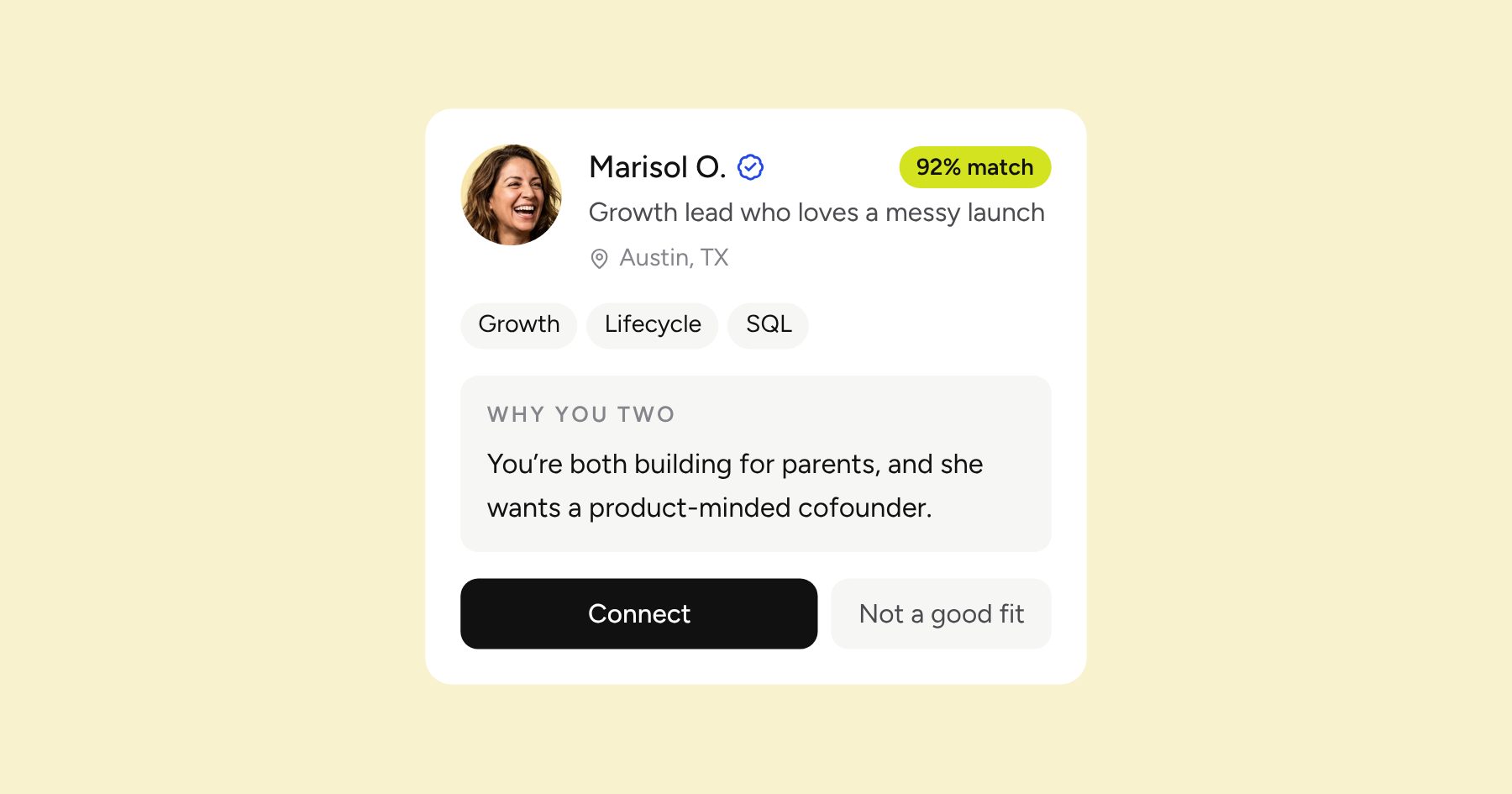
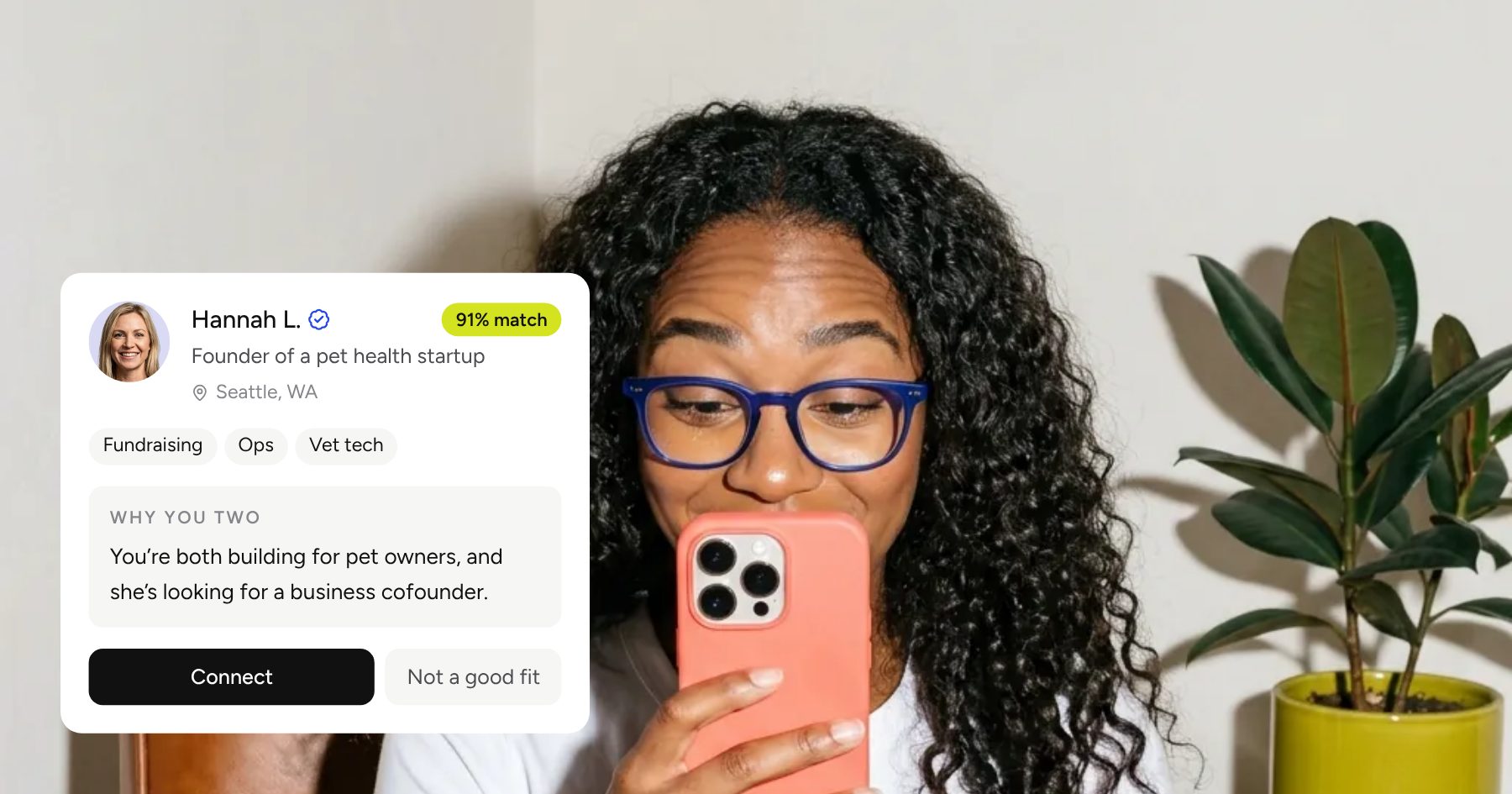
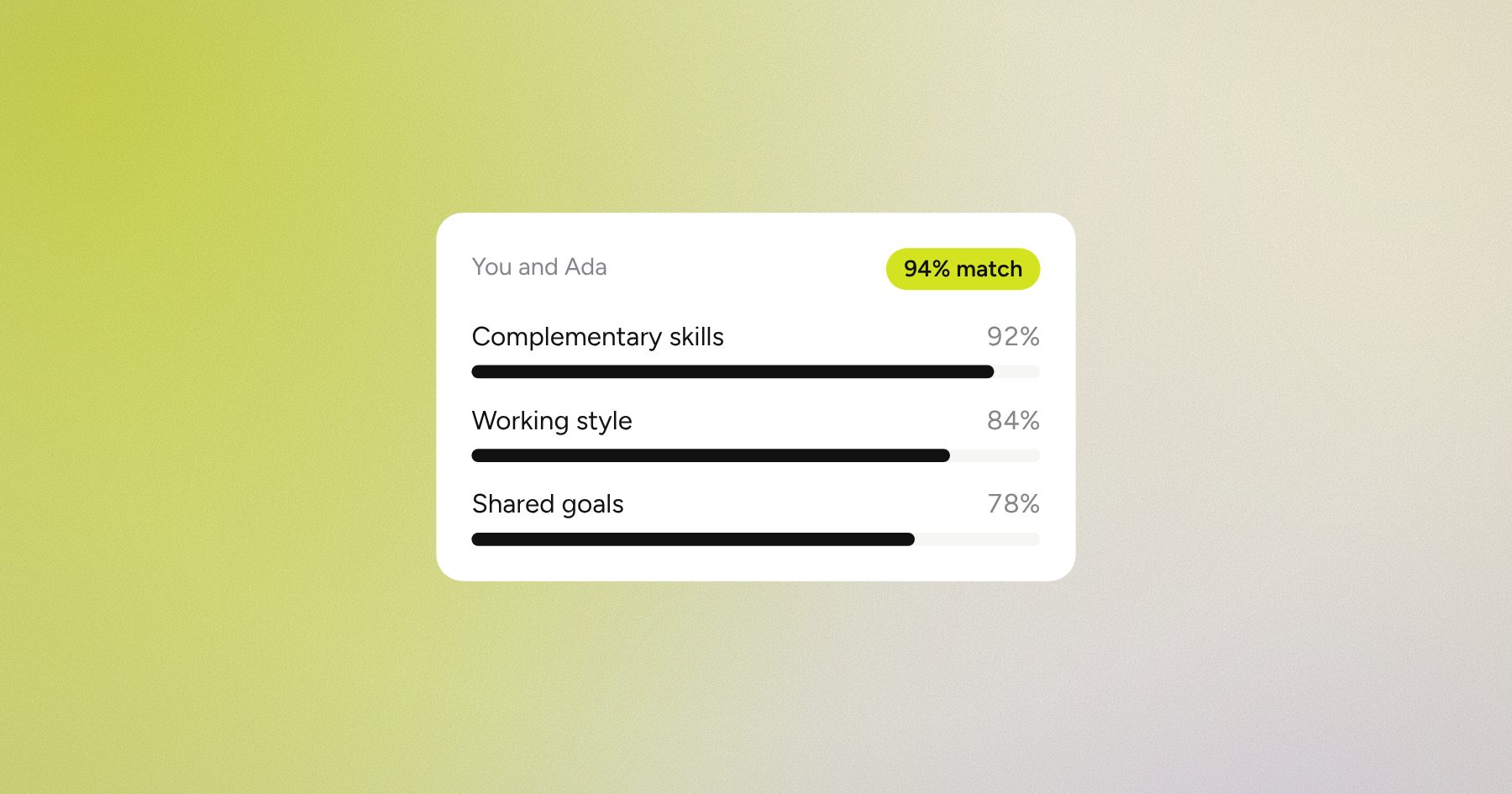
Kinhive stands out because it’s designed specifically for women-led businesses looking to build stronger teams. The platform uses AI-powered matchmaking that goes beyond just skills—it considers working style, personality, life stage, and values alignment.
What makes Kinhive particularly valuable for finding a technical co-founder is the focus on long-term partnerships rather than just project-based work. The platform supports filtering for both equity and contract arrangements, and includes built-in document templates to help structure founder agreements, offer letters, and more.
Y Combinator Co-Founder Matching
YC’s co-founder matching platform is free and connects you with people who are serious about starting companies. The quality tends to be high because applicants are pre-screened, and many are YC alumni or have startup experience.
Developer Communities: IndieHackers, Product Hunt, Dev.to
These platforms are where technical people who are interested in entrepreneurship hang out. IndieHackers is particularly good because the community is focused on building profitable businesses, not just side projects.
On Dev.to, look for developers who write about startup topics or business-focused technical content. These are the people who think beyond just code.
Local Networks and Slack Groups
Don’t overlook your local startup ecosystem. Most cities have founder-focused Slack groups, meetups, and co-working spaces where you can meet potential co-founders in person.
The advantage of local networks is that you can build relationships over time rather than making cold pitches.
Strategic Cold Outreach
LinkedIn and Twitter (fine, X...) can work, but your success rate will be low unless you’re strategic about it. Focus on people who’ve shown interest in startups—maybe they’ve tweeted about entrepreneurship or have “looking for co-founder opportunities” in their bio.
How to Pitch Your Startup When You Can’t Build It Yourself
This is where many non-technical founders struggle. How do you convince someone to join your team when you can’t show them a working product?
A Simple Framework: Problem, Traction, Vision, Role
Problem: Clearly articulate the problem you’re solving and why it matters. Use specific examples and data when possible.
Traction: Share what you’ve accomplished so far. Customer interviews, mockups, partnerships, social media following—anything that shows momentum.
Vision: Paint a picture of where you’re going and why this is the right time to build this solution.
Role: Be specific about what you need from them and what they can expect in terms of equity, time commitment, and decision-making authority.
Show, Don’t Just Tell
Include a link to your pitch deck, a short video explaining your vision, or detailed mockups of what you want to build. The more concrete you can make your idea, the easier it is for someone to envision working on it.
Sample Outreach Message for a Pitching Technical Cofounder
“Hi [Name], I saw your post about looking for co-founder opportunities. I’m building [Product] to solve [Specific Problem] for [Target Market]. We’ve already [Specific Traction]. I’d love to show you our vision and see if there’s a fit. Here’s a 2-minute video explaining what we’re building: [Link]”.
Keep it short, specific, and focused on what you’ve already accomplished.
Equity, Salary, or Both?
One of the trickiest parts of co-founder discussions is compensation. How much equity should you offer? Should there be any salary involved?
What’s Typical at Different Stages
Idea Stage: If you’re both starting from zero, equity splits are often close to equal (40-60% range), depending on who’s doing what.
MVP Stage: If you’ve already validated the idea and built some traction, you might offer 20-40% equity.
Early Revenue Stage: With proven traction and revenue, equity offers typically range from 10-25%.
Sample Equity Ranges and Negotiation Tips
Remember that equity is about future value, not current contribution. Consider using vesting schedules (typically 4 years with a 1-year cliff) to protect both parties.
Don’t get stuck on exact percentages early on. It’s more important to find the right person and figure out fair terms together.
Keeping Things Flexible
Consider starting with a trial period—maybe 3 months working together on specific projects before finalizing the partnership. This lets both of you evaluate the fit without making permanent commitments.
Red Flags and Green Lights
Not every technical person will make a good co-founder. Here’s what to watch for:
Red Flags
Overpromising on Timelines: If they say they can build everything in a few weeks, they either don’t understand the scope or they’re telling you what you want to hear.
Unfamiliar Tech Stacks: Be wary of someone who wants to use bleeding-edge technology they’ve never worked with. Your startup isn’t the place to learn new frameworks.
Poor Communication: If they can’t explain technical concepts in simple terms, how will they communicate with customers, investors, or future hires?
Green Lights
Startup Experience: They’ve worked at early-stage companies before and understand the realities of startup life.
Realistic Timelines: They ask detailed questions about requirements and give thoughtful estimates.
Collaborative Energy: They’re excited about the problem you’re solving and contribute ideas beyond just the technical implementation.
Templates and Tools to Get Started
To make your search more efficient, here are some practical resources:
Founder Agreement Template
Kinhive provides customizable agreement templates that cover equity splits, vesting schedules, and decision-making authority. Having these conversations early prevents problems later.
Co-Founder Decision Checklist
Before making any commitments, evaluate:
- Do we have compatible working styles?
- Are we aligned on the company’s vision and values?
- How do we handle disagreements?
- What are our expectations for time commitment?
- How do we want to split responsibilities?
Tech Scope Brief Template
Create a simple document outlining:
- What you want to build (features, not just concepts)
- Who your users are and how they’ll use the product
- Any technical requirements or constraints
- Timeline expectations
This helps technical people understand the scope and gives them a framework for asking good questions.
Why Kinhive Works for Non-Technical Founders
While there are many places to find technical co-founders, Kinhive’s approach addresses some of the biggest challenges in the search process.
Kinhive’s opportunity filtering is built specifically for equity and contract-based collaborations, which means everyone there understands the co-founder dynamic. The AI-powered matching considers factors beyond just technical skills—things like work style compatibility and shared values that are crucial for long-term partnerships.
The focus on women-led businesses also creates a more supportive environment for founders who might feel out of place in traditional tech networking spaces. The best part: you can get started completely for free.
Building the Partnership That Lasts
Finding the right technical co-founder takes time, and that’s okay. The best partnerships are built on mutual respect, shared vision, and complementary skills. Don’t rush the process just because you’re eager to start building.
Focus on finding someone who’s as excited about the problem as you are. Technical skills can be developed, but passion and commitment are much harder to teach.
The right technical co-founder won’t just build your product—they’ll help you think through the harder questions about what you should build and why. They’ll push back on your assumptions, contribute to the business strategy, and share the emotional ups and downs of startup life.
Ready to start your search? Join Kinhive today for free and connect with technical partners who are looking for exactly what you’re building. The platform’s AI-powered matching will help you find people who align with your vision, working style, and goals—not just your technical requirements.
Your co-founder is out there. Now you know how to find them.