How to Find a Cofounder as a Female Founder
Learn how to find a cofounder as a female founder—where to look, what to ask, and red flags to watch for before you commit.
Kinhive Team · July 21, 2026 · 8 min read
On this page+
- What makes cofounder matching different from hiring?
- Where female founders actually meet cofounders
- What to look for beyond skills
- Questions to ask before you commit to a cofounder
- Red flags to watch for in an early cofounder conversation
- How cofounder matching platforms work
- FAQ: common questions about finding a cofounder
Finding a cofounder is one of the hardest things you’ll do as a founder. Finding one as a woman adds another layer. The networks most people lean on — old college friends, former colleagues from male-dominated industries, startup bros with warm intros — often don’t look the same for female founders. The good news is that the landscape has genuinely shifted. There are more intentional ways to find the right person now, and being deliberate about the search actually produces better matches than stumbling into one over drinks at a conference.
This guide walks you through everything: where to look, what to look for, what to ask, and how to spot a bad fit before you sign anything.
What makes cofounder matching different from hiring?
When you hire someone, you’re bringing them into a structure you’ve already built. You set the hours, the pay, the scope. If it doesn’t work out, there’s a process. Cofounder relationships are different in almost every way. You’re choosing a partner before the structure exists. You’re splitting equity, sharing decision-making power, and often working closer together than most marriages. The stakes are high and the exit is painful if you get it wrong.
Hiring is transactional. Cofounder matching is relational. That distinction matters because it changes what you should be optimizing for. Skills are the floor, not the ceiling. The real question is whether this person will still be someone you want to build with after a bad month, a pivot, a rejected funding round, or a disagreement about company direction.
Where female founders actually meet cofounders
The most common places women find cofounders aren’t the obvious ones. Here’s where it actually happens:
- Accelerators and fellowship programs. Programs like Y Combinator, Founder Institute, and women-focused accelerators like Halcyon and Female Founders Alliance create intense, shared environments that naturally surface cofounder relationships. You’re working alongside people who are building too, and you get to observe how they think under pressure.
- Alumni networks. University alumni networks are underused. If your school has an entrepreneurship alumni group, that’s a warm starting point. People from shared backgrounds already have a baseline of trust.
- Industry-specific communities. Slack groups, Discord servers, and membership communities built around a specific domain (edtech, femtech, climate, etc.) often have the most relevant technical talent and domain knowledge.
- Cofounder matching platforms. Platforms designed specifically for cofounder matching have matured a lot. They let you filter for skills, location, and availability, and some now use AI to surface matches based on how you work, not just what you’ve done.
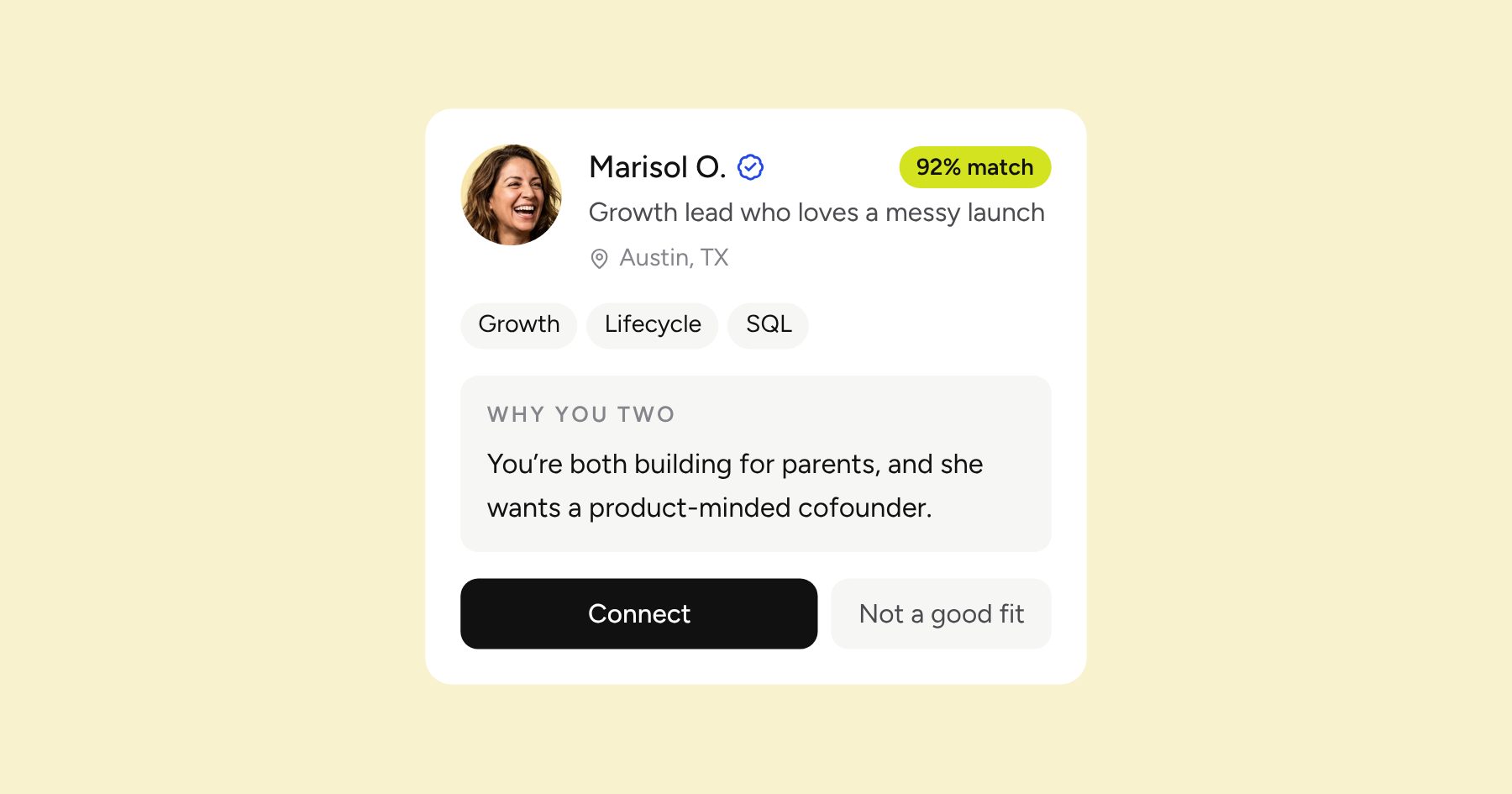
- Women-focused professional networks. Curated communities designed specifically for women who are building businesses have become one of the highest-quality sources for cofounder connections. The intentionality of the membership tends to produce better fits than general startup forums. Platforms like Kinhive are built specifically for this: AI-curated introductions between women based on how they work, what they value, and what they’re building, so every match comes with a clear reason it’s relevant.
What to look for beyond skills
You need someone who can do things you can’t. That’s the obvious part. But the cofounders who blow up their companies usually have overlapping skills and mismatched everything else. Here’s what to actually evaluate:
- Working style. Are they a planner or a sprinter? Do they need lots of structure or do they thrive in ambiguity? Do they communicate over-frequently or go quiet for days? Neither style is wrong, but a mismatch will create friction constantly.
- Life stage. Someone with young kids and a mortgage has different constraints than someone who’s single with six months of runway. That’s not a dealbreaker, but it has to be named. Different life stages create different risk appetites and different capacities for chaos.
- Risk tolerance. How long are they willing to go without salary? What’s their backup plan? Are they comfortable burning bridges with their old employer, or are they keeping one foot out the door? You want someone who’s actually in, not someone who’s testing the water.
- Values alignment. What do they think a good company culture looks like? How do they feel about profit vs. mission? What matters to them about how the business is run? You don’t need to agree on everything, but you need to agree on the big things.
Questions to ask before you commit to a cofounder
This is the list that matters. These aren’t icebreaker questions. These are the ones that reveal whether someone is actually the right partner. Ask them early, ask them directly, and pay attention to whether the answers make you feel more confident or less.
- “What does your ideal working week look like right now?” This surfaces availability, structure preferences, and whether they’re actually full-time on this or fitting it in around something else.
- “How long can you go without taking a salary, realistically?” Don’t guess. Know. Financial runway is a concrete constraint that affects every decision you’ll make together.
- “Tell me about a time you disagreed with a colleague and how you handled it.” You’re looking for self-awareness, directness, and the ability to stay in a conflict without going around it or blowing it up.
- “What does success look like for you in five years, and is it tied to this company?” A cofounder whose five-year vision doesn’t involve your company is a short-term partner at best.
- “What role do you see yourself in as we grow — and what happens when that role gets too big for you?” This is the ego question. Founders who can’t answer this honestly are a risk.
- “How do you prefer to make big decisions? Do you want consensus or do you prefer clear lanes?” Decision-making structure is one of the top reasons cofounding relationships break down. Get this on the table now.
- “What would make you walk away from this?” This is a hard question and it should be. The answer tells you what they’re actually protecting and what their limits are.
- “What are you not good at, and how do you manage that?” A cofounder who can’t name their own weaknesses will be difficult to work alongside when those weaknesses show up, and they will.
- “How do you feel about outside investment, and what’s your ceiling on dilution?” Founders who disagree on fundraising strategy fight about it at every inflection point. Know where you both stand now.
- “What does a healthy cofounder relationship look like to you?” This is deceptively simple. Their answer tells you whether they’ve thought about it, whether they’ve had hard experiences before, and whether their expectations match yours.
- “Have you had a business partnership fall apart? What happened?” Past cofounder or business partner breakups aren’t automatically red flags, but how someone talks about them is very revealing.
- “What are you building this for? Is it the exit, the mission, the craft, or something else?” Not everyone has to have the same motivation, but you need to understand theirs and decide if you can build alongside it.
Red flags to watch for in an early cofounder conversation
Some things are easier to name in retrospect than in the moment. Watch for these early:
- They talk significantly more than they listen.
- They’re vague about their current commitments or existing obligations.
- They speak dismissively about previous partners or employers.
- They resist talking about equity, legal structure, or roles — citing it as “too early.”
- They have strong opinions about your idea but limited curiosity about your thinking.
- They treat your domain expertise as secondary to their technical or financial skills.
- They’re slow to respond during the exploration phase, before anything is even agreed.
None of these are automatic disqualifiers in isolation. But patterns matter. If you notice more than two or three of these things in your first few conversations, trust that signal.
How cofounder matching platforms work
The basic version of a cofounder matching platform works like a job board or dating app: you create a profile, list your skills and what you’re looking for, browse others, and reach out. The better platforms go further. They use structured onboarding to capture how you work and what you’re building, then surface matches with context rather than just a profile dump. The best ones are curated, meaning not everyone gets in, which keeps the quality of the pool higher.
What separates a useful matching platform from a noisy one is the quality of the membership and the depth of the matching logic. A platform with a thousand low-intent users is less useful than one with two hundred people who are genuinely ready to build something. For women specifically, platforms that are built around female founders tend to produce better results because the context is already shared. You’re not explaining why you’re building, you’re getting to the more important questions faster.
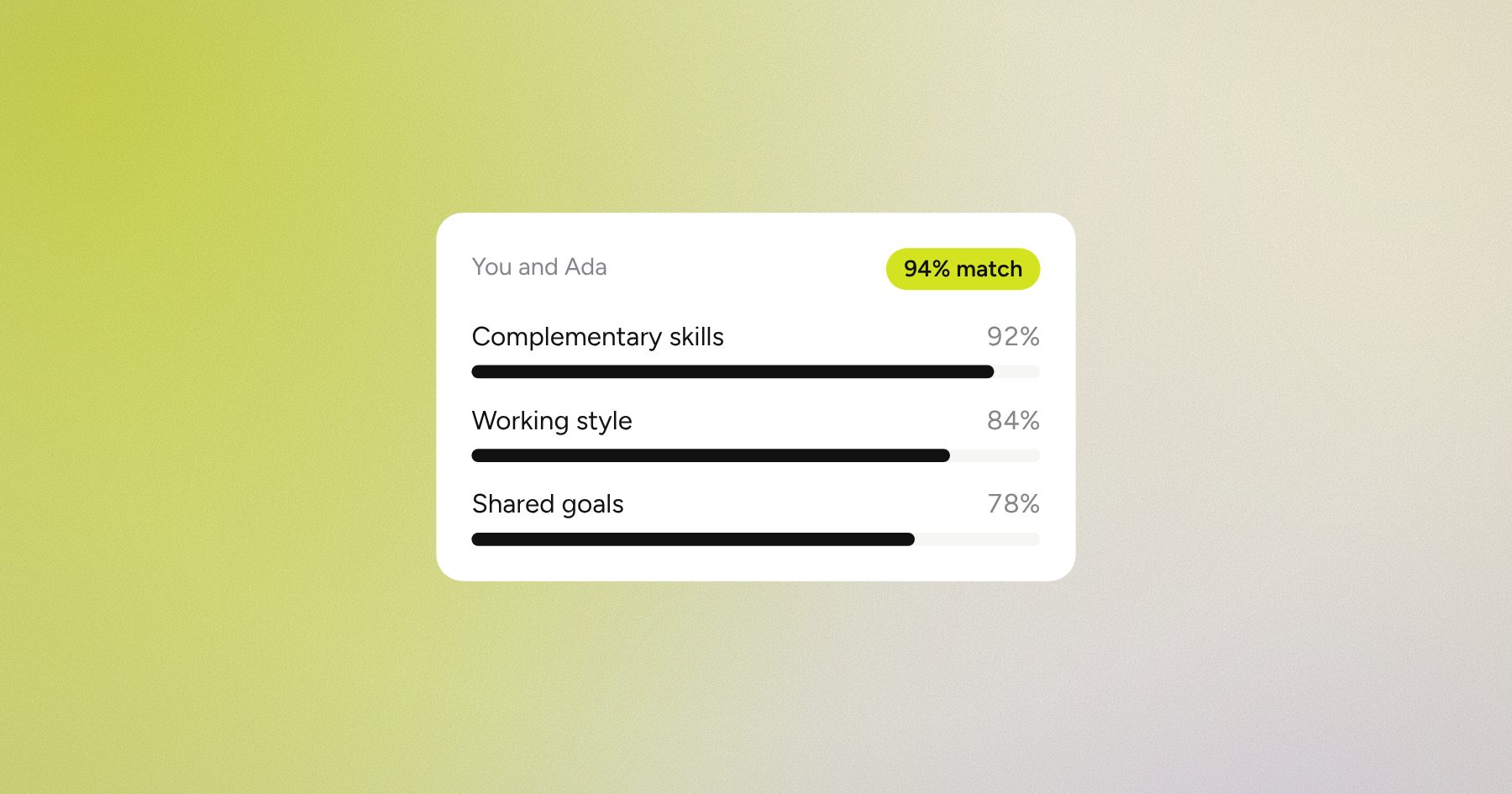
Kinhive works this way. It’s a private, application-only community for women who are building businesses, and the AI-powered matchmaking goes beyond skills to surface connections based on working style, values, and what you’re actually trying to build. Members get daily prompts that surface fresh connections, a community feed for sharing work in progress, one-on-one messaging and a virtual coworking space, all free to use.
FAQ: common questions about finding a cofounder
How long does it take to find a cofounder?
Most founders report it takes anywhere from three to twelve months to find someone they’re ready to commit to. The timeline shortens significantly when you’re searching in high-quality, intentional communities rather than casting wide. Give yourself at least a few months of real conversations before expecting to find the right person.
Should you pay someone to help you find a cofounder?
There are some paid matchmaking services out there, but most founders don’t need them. A well-curated platform or community membership is usually a better use of money because you get ongoing access to relationships, not just a one-time introduction. If a platform offers a free tier or a low entry price point, start there and upgrade when you’re getting real value from it.
Can you have a remote cofounder?
Yes, and many successful companies have been built this way. The key is being more deliberate about communication rhythms, decision-making processes, and how you build trust without shared physical space. Remote cofounder relationships work best when both people are experienced remote workers and when you invest in regular video time, not just async updates.
Finding the right cofounder is a research project, a relationship, and a negotiation all at once. The women who find great cofounders aren’t lucky — they’re strategic about where they look and honest about what they need. Start with the right communities, ask the hard questions early, and don’t rush the commitment just because the idea feels urgent.
If you’re ready to find collaborators, cofounders, and partners who actually get what you’re building, Kinhive was made for exactly this. It’s a private, AI-powered community for women who are building — not a directory, not a forum, but a curated space where every introduction comes with a reason. Join free and start meeting the people who belong in your corner.